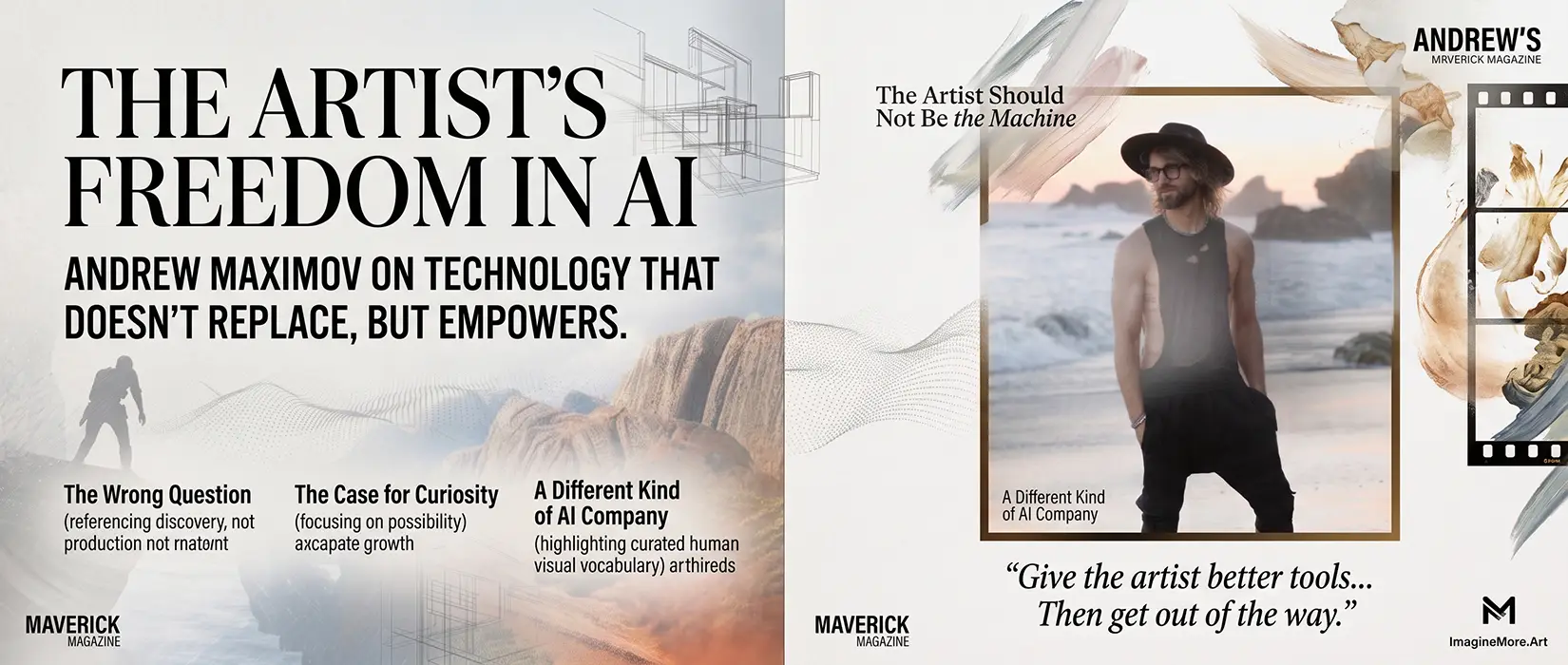
Andrew Maximov has spent his career questioning the way creative work gets made. Now, he is asking whether artificial intelligence can give artists more freedom instead of taking it away.
There are two very different ways to enter the conversation about artificial intelligence. You can begin with the machine. Or you can begin with the person.
Andrew Maximov has always begun with the person.
Long before generative AI became the cultural obsession it is today, Maximov was asking a deceptively simple question: why should artists spend their time doing things that technology can do for them? It is a question that has shaped nearly every stage of his career. As a young artist and developer, he moved into the world of game development and eventually became Technical Art Director at Naughty Dog, working on some of the industry’s most celebrated titles, including Uncharted and The Last of Us. Later, he founded Promethean AI, a company designed to help artists build complex virtual worlds without drowning in repetitive technical work.
The idea was never to remove the artist from the process. It was to remove everything that prevented the artist from being an artist. Today, Maximov is pursuing that philosophy through ImagineMore.Art. And in an era when AI has become synonymous with automation, imitation and controversy, his approach is refreshingly different. He is interested in creative independence.
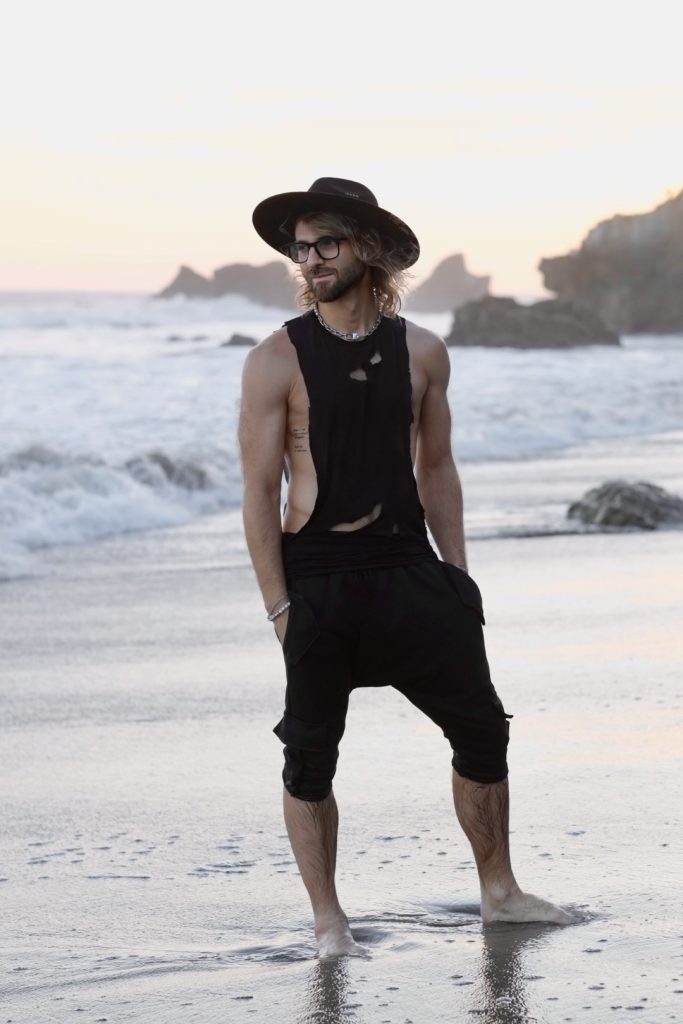
The Artist Should Not Be the Machine
There is an uncomfortable reality behind much of the entertainment industry. Creative people can spend enormous amounts of time doing work that is necessary but not particularly creative:
- Organizing assets.
- Searching for references.
- Building environments.
- Repeating technical processes.
- Solving production problems.
- Meeting deadlines.
The larger the project becomes, the more time can disappear into everything surrounding the actual act of creation. Maximov saw this firsthand. At Naughty Dog, he worked in an environment where hundreds of artists could contribute to a single enormous virtual world. The scale of modern game production made the problem impossible to ignore.
When he founded Promethean AI, his goal was to use artificial intelligence to help artists deal with some of that complexity. The system could assist with building environments and handling repetitive tasks, allowing human creators to concentrate on the decisions that actually required artistic judgment. (GamesBeat)
It was an early version of an argument that has become much more important today: Automation does not have to mean replacement. Sometimes it means freedom.
The Wrong Question
The current AI debate often asks whether machines will replace artists. Maximov’s career suggests that the better question may be whether machines can replace the parts of an artist’s job that never should have required an artist in the first place. That distinction changes everything.
If an AI system can search thousands of references in seconds, the artist can spend that time thinking. If it can organize information, the artist can experiment. If it can handle repetitive production work, the artist can make more creative decisions.
The goal isn’t fewer artists. The goal is more of the artist. That idea runs through Maximov’s earlier work and continues into ImagineMore.
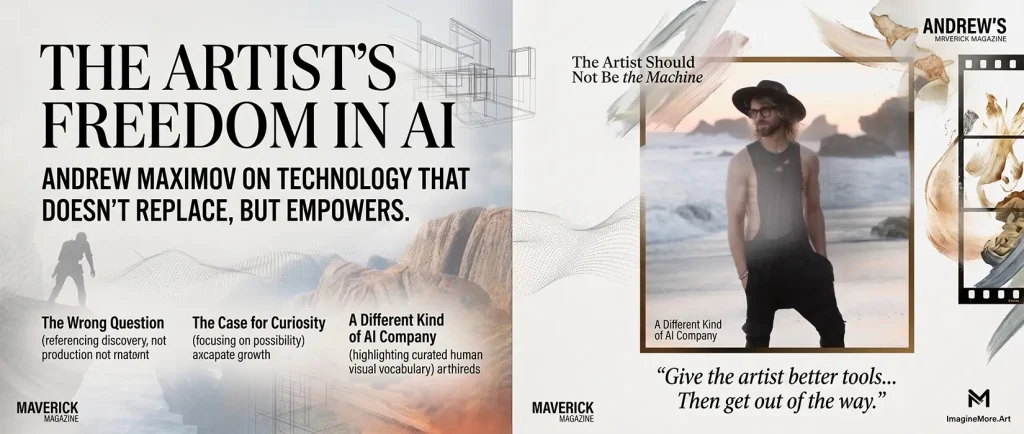
A Different Kind of AI Company
ImagineMore isn’t simply another AI image generator. Its foundation is a vast library of human-created visual work spanning different periods and disciplines. Classic art, cinema, animation, video games and other forms of visual culture can be explored together. That makes the platform interesting for a reason that has little to do with generating pictures.
It gives artists something they have always needed: references.
Every artist has a visual vocabulary. Some of it comes from formal education. Some comes from museums. Some comes from films, books, games, photography, architecture or fashion. Much of it comes from simply looking. The difficulty is that the world’s visual vocabulary has become almost impossibly large. ImagineMore uses AI to help navigate it.
Instead of beginning with a blank prompt and asking a machine to invent something, an artist can begin with human creativity that already exists and explore outward. One image can lead to another. One discipline can lead to another. A frame from a movie can lead to a painting. A game environment can lead to an architectural reference. A contemporary composition can lead to something centuries old.
The machine is not making the journey. It is helping the artist travel farther.
The Case for Curiosity
That may be the most radical part of Maximov’s philosophy. He doesn’t seem particularly interested in making artists faster simply for the sake of making them faster. He is interested in giving them more possibilities.
There is a difference. Speed is useful in production. Curiosity is useful in art.
An artist who can explore ten times as many references may not create ten times as much work. They may create one piece that would otherwise never have existed. That is where technology becomes genuinely exciting. Not when it produces more. When it enables discovery.
The End of the Blank Page
For centuries, the blank page has been both an invitation and a source of anxiety. What do you make? Where do you begin? What has already been done? How do you find your voice?
AI has the potential to make the blank page disappear, but Maximov’s approach suggests that perhaps the answer isn’t to fill it instantly. It is to make the world around the artist larger. ImagineMore can give creators access to an enormous visual reference library, while AI can help them navigate and analyze that material.
That is a very different proposition from asking a machine to produce a finished artwork. It puts the emphasis back where it belongs. On the person making the decision.
The Importance of Saying No
There is another quality that machines may never fully reproduce: Taste.
An artist’s skill is not simply knowing how to make something. It is knowing what to make. And knowing what not to make. Anyone who has worked in a creative field understands that some of the most important decisions happen through rejection:
- This isn’t right.
- This is too obvious.
- This has been done before.
- This doesn’t feel like me.
- Try again.
Those decisions are part of authorship. AI can provide possibilities. It can surface references. It can accelerate processes. But someone still has to decide what deserves to exist. That is where Maximov places the human being.
From Game Worlds to the World of Art
There is a fascinating progression in Maximov’s career. At Naughty Dog, he helped artists create enormous fictional worlds. With Promethean AI, he built tools to make world building more accessible and less technically burdensome. With ImagineMore, he is working on something even larger. Not a fictional world. The real visual world. The accumulated record of human creativity.
That means paintings and movie frames can sit beside game art and animation. Different generations and different mediums can become part of the same creative conversation. For artists, that can mean access to influences they might never have encountered otherwise. For students, it can mean a radically different way of learning. For the broader culture, it offers something increasingly valuable: a way of distinguishing human creativity from the enormous amount of synthetic content now entering the visual ecosystem.
A Future Worth Fighting For
Maximov has never presented technology as neutral. Technology changes the people who use it. It changes industries. It changes economics. It changes who gets to participate.
That is why the question of AI and art cannot simply be whether the technology works. It has to be who benefits from it. If AI primarily benefits companies by allowing them to produce more with fewer people, artists have good reason to be afraid. If AI gives artists greater access to knowledge, better tools, more creative freedom and more time to develop their ideas, the equation looks very different.
That choice is still being made. And people like Maximov are trying to influence the answer. His vision is not an art world without technology. It is an art world in which technology works for the people who make it. That may sound less dramatic than the promise of machines that can create anything. But it could be far more important. Because the future of art will not ultimately be decided by what artificial intelligence is capable of producing. It will be decided by what human beings choose to do with it.
Andrew Maximov has spent his career pushing against the assumption that technology should dictate the creative process. His next chapter is built around the same rebellion.
Give the artist better tools.
Give the artist more knowledge.
Give the artist more freedom.
Then get out of the way. Let the artist make the art.